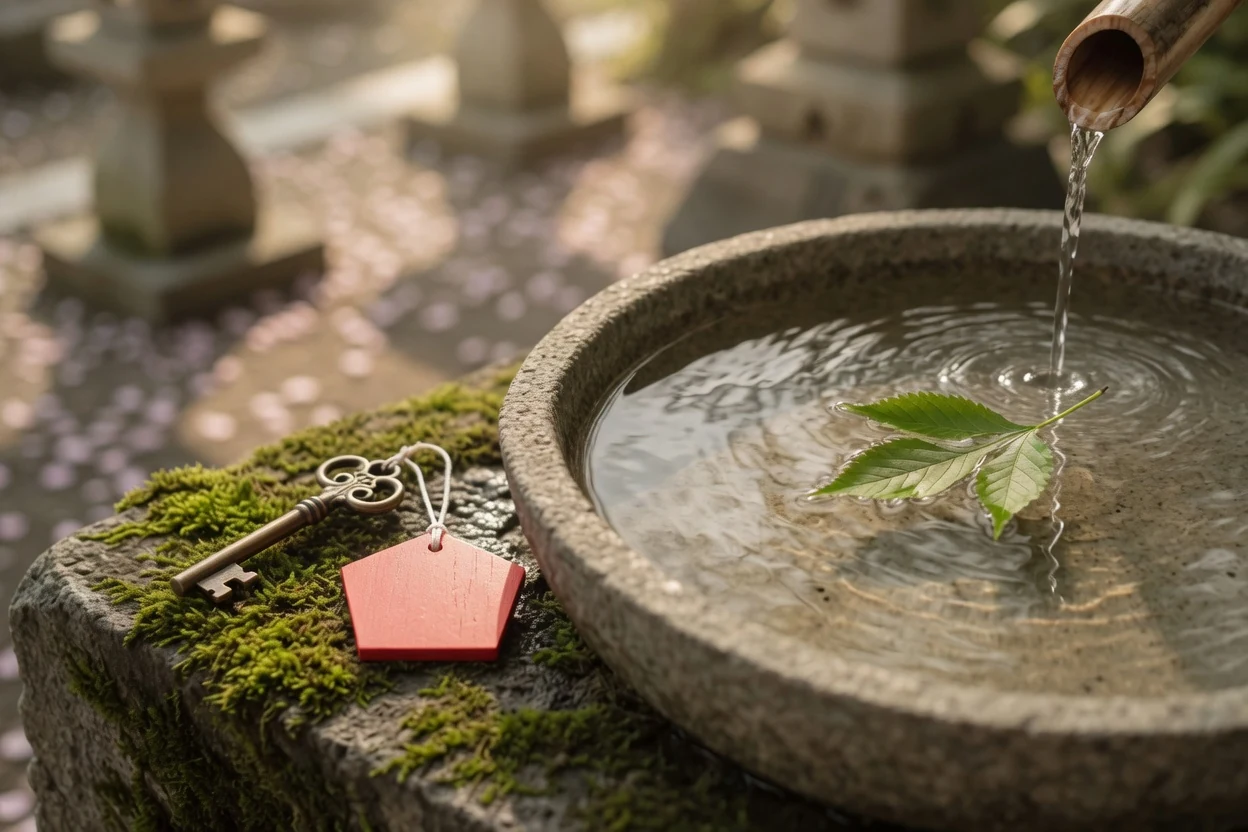
Some slips only leave “lost items” at the margin—neither daikichi nor kyo, just a brief phrase that nods at empty hands. I don’t treat it as a theft forecast. I reopen it as a mirror of whether drop-spots have gone messy.
The other day I hurried the ladle back and hunted for my pass at the gate. After the offering I opened two pockets at once and found neither. A heavy lost-item line that day was no mystery. Hands drop memory in proportion to haste.
Don’t treat a soft line as “you’ll be robbed”
When kyo or suekichi brushes lost items, people leap to theft. Leisure fortune slips don’t hold that power. What I usually notice is doing two tasks at once, changing drop-spots daily, never looking at the bag’s floor. The paper tracks today’s placing habit more than a culprit.
Daikichi tempts another slip-up. Good luck means forgotten keys still return, so we leave them on a counter. On bright days, returning them to the same pocket on the way out often helps more later.
Only one reverse walk that night
After reading, I skip ransacking the house. I retrace yesterday’s path once, backward: door, gate, temizuya stone, last chair. Tiny moves—but the lost-item line makes the eyes finer.
A frequent miss is three places at once—drawers, bags, fridge—then none are finished. The slip is not a checklist. One focus makes a better luck memo. Keys? One dish. Pass? The same inner pocket. The theme can change daily.
On days you cannot visit a shrine, putting keys in the same spot on return still returns some of the line. It is not a lost-and-found office. If something is truly gone, reporting comes before paper. Rechecking one drop-spot is the right distance.